How to Photograph a Piazza Without Making It Look Like a Postcard
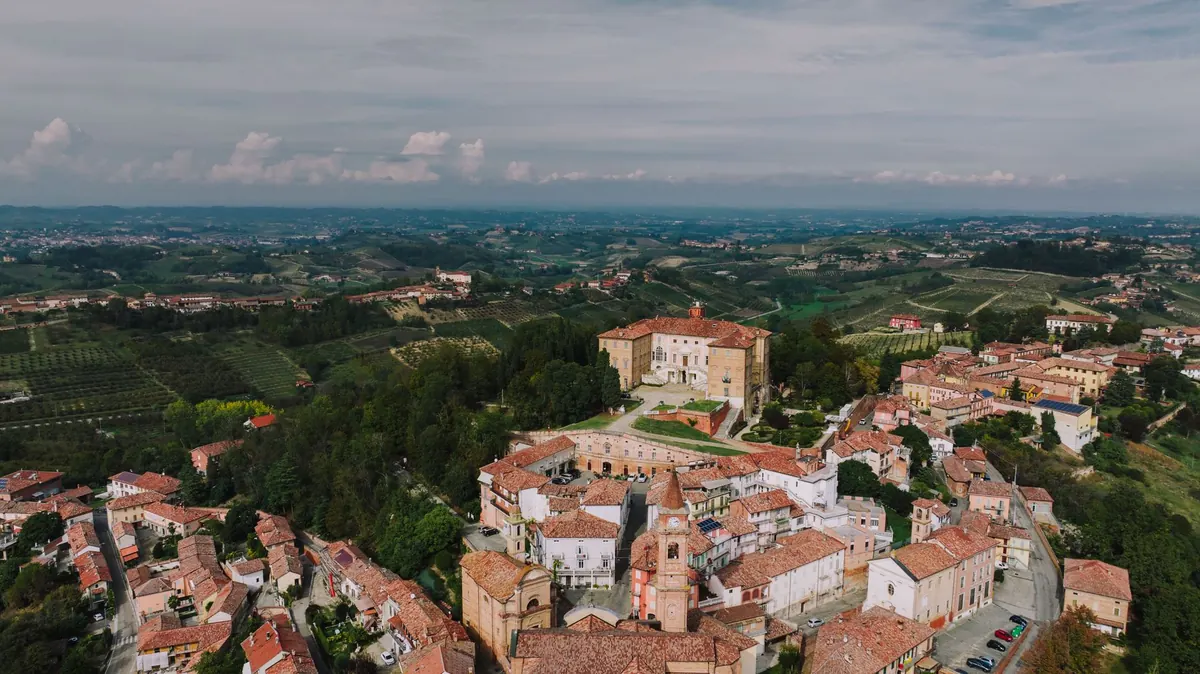
A piazza is not a stage set. It is a room without a roof, used by people who are not performing for you. That is why the most disappointing photographs of Italian squares often look perfect: an empty fountain, a symmetrical facade, a sky the color of a postcard rack. The place is there, but the life has been edited out before the shutter is even pressed.
Photographing a piazza well means resisting the urge to summarize it. You are not making a brochure. You are collecting evidence of how a square actually feels at eight in the morning, when the shutters go up and the delivery vans idle, or at six in the evening, when the light goes gold and the passeggiata begins. The goal is a photograph that smells of coffee and stone dust, not one that could be printed on a fridge magnet.
Begin at the Edges
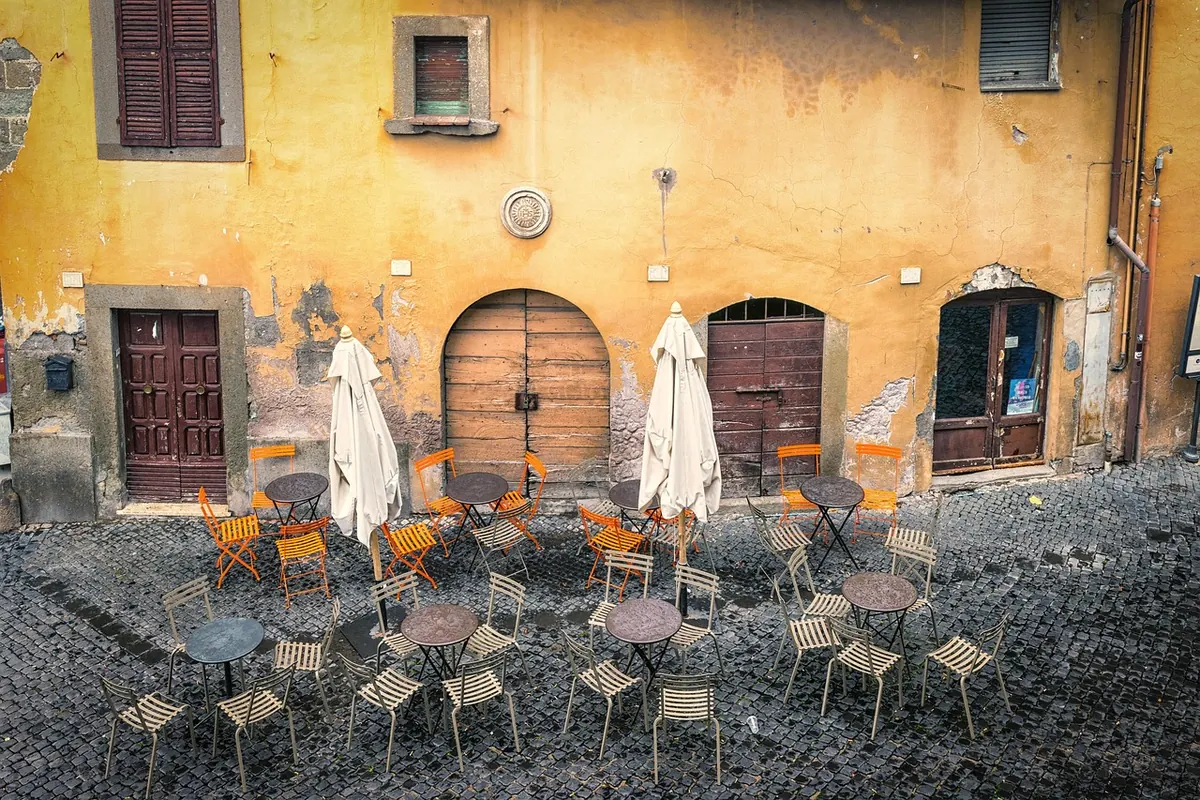
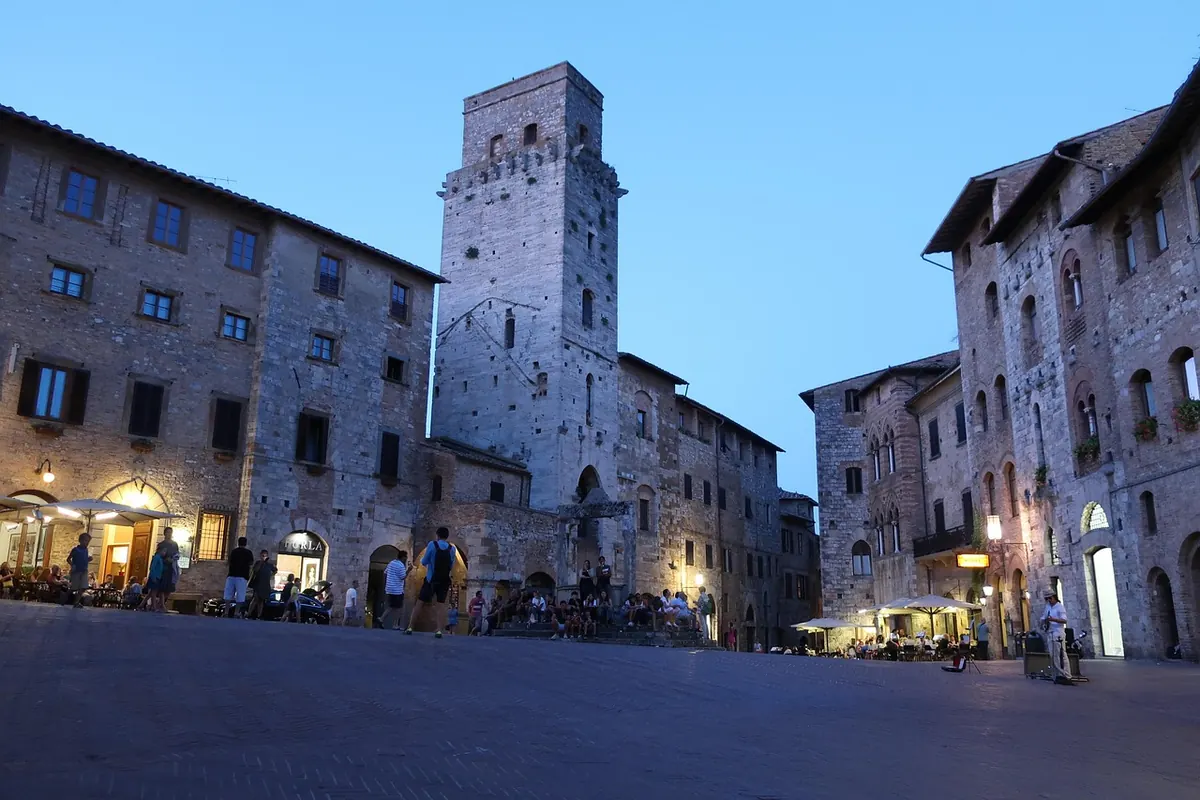
Most visitors stand in the middle of the piazza and point the camera at the obvious monument. Do the opposite. Walk the perimeter first. Stand under the porticoes, beside the café tables, near the newspaper kiosk. The edges are where the square meets daily life: a barista stacking cups, a scooter parked half on the pavement, a child chasing pigeons between two columns.
A useful first pass is to scout without taking pictures. Give yourself ten minutes to notice how the space works.
- Walk the full perimeter and note the entrances and exits. People move through these gaps, and they make natural frames.
- Find three foregrounds that are not the fountain: a café chair, a stone bollard, a produce crate, a doorway with peeling paint.
- Look up. Balconies, shutters, wires, and washing lines give the square a ceiling and a sense of scale.
- Turn around. The view away from the main monument is often the more honest photograph.
This perimeter walk also solves a practical problem. Once you know where the light falls and where people gather, you can choose a position and wait instead of wandering with the camera glued to your eye.
Compose in Layers, Not Symmetries
The postcard look comes from centering everything: fountain in the middle, church behind it, sky above, no interruption. It is clear and dead. A stronger photograph has layers. Put something close to the lens—a chair back, a column, the shoulder of a person walking past—then let the middle distance carry the action and the background explain the place. The eye travels through the frame instead of stopping at a single landmark.
Use the square as a room
Think of the piazza as an interior. The buildings are walls, the café seating is furniture, and the people are the reason the room exists. A doorway can act as a frame within a frame. A row of arches can give rhythm. A shadow across the paving can divide the composition without any dramatic editing.
Try a few small shifts. Move two steps left so the church is not dead center. Lower the camera to include the cobbles and the reflections after rain. Raise it slightly to show the tops of the shutters and the tangle of cables. Keep the horizon level unless you have a deliberate reason not to; a tilted square usually looks careless, not dynamic.
Wait for one good interruption
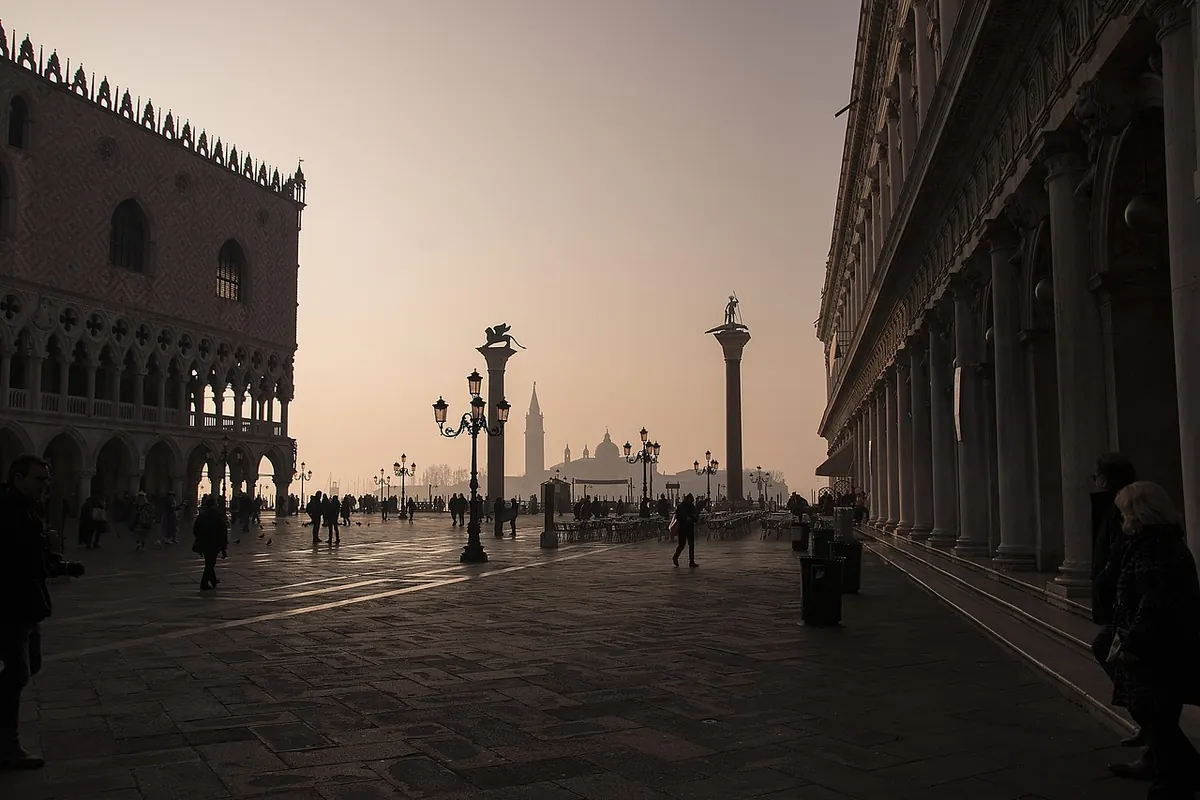
A composition can be finished before a person enters it. Find the frame, check the corners, set your exposure, and then wait. Someone will cross the square. A waiter will lean in a doorway. A dog will stop exactly where the light is best. This is not luck; it is preparation plus patience. The photograph then has a subject without becoming a portrait of a stranger.
- Use people small in the frame to show scale and movement without making them the subject.
- Leave space for walking so the viewer senses where the person came from or where they are going.
- Include one imperfection—a parked car, a plastic chair, a bit of scaffolding—if it tells the truth of the place.
- Shoot both wide and close; the wide frame sets the scene, the close frame remembers the detail.
Read the Light Like a Local
Italian squares are often photographed in the soft glow of late afternoon, but that is only one version of the place. Midday light is hard and unflattering, yet it can be wonderful for shadows: awnings cutting dark shapes across the pavement, people hugging the shade of a portico, laundry hanging in a bright rectangle of sun. Do not avoid the hours when locals are actually using the square.
When the sun is high, expose for the highlights and let some shadows go deep. A little contrast suits stone and stucco. When the light is soft, look for color instead: faded shutters, a green awning, the red of a football shirt, the pale yellow of an aperitivo. If you are shooting into the sun, protect the highlights and accept that faces may become silhouettes; that can be more evocative than a perfectly lit portrait of a stranger.
Keep an eye on the ground. Wet stone after a storm, polished travertine, and shadow patterns can turn an ordinary paving into a foreground worth including. A polarizing filter can help with reflections, but use it gently; over-polarized skies look like a different country.
Time the Crowds, Don’t Erase Them
An empty piazza is a rare and slightly suspicious thing. If you want the square to feel alive, learn its rhythms rather than waiting for a miracle gap in the crowd. Early morning brings deliveries, street cleaners, and the first coffee drinkers. Mid-morning has shoppers and school runs. Early afternoon can go quiet while kitchens close and shutters stay half down. Evening brings the passeggiata, when families and friends walk without a particular destination.
These are general patterns, not rules; every town and season differs. The practical move is to visit the same square at two or three different hours if you can. You will quickly see which corner catches the morning light, where the afternoon shade collects, and when the café chairs come out.
People are not clutter. They are the scale, the movement, and the proof that the square is a working part of the town. If someone is close enough to be recognizable, be decent: ask before making a portrait, or keep them small and incidental. Privacy expectations vary, and a little courtesy goes further than a long lens.
Collect the Ordinary Details
The postcard version of a piazza is all facade. The lived-in version includes the edicola with its magazines clipped to a line, the waiter wiping a table, the crates of peaches stacked outside a grocer, the cat asleep on a scooter seat. These details are not extras. They are the texture that makes a place memorable.
Spend part of your time looking away from the main monument. Photograph a doorway with a curtain moving in the breeze. Frame a row of café cups through a window. Catch the moment a shopkeeper lifts the metal shutter. These photographs may not identify the piazza at a glance, but together they describe it better than a wide shot ever could.
Edit for Place, Not Poster
Restraint is the difference between a photograph and a souvenir. Start with a sensible crop: remove the distraction at the edge, keep the layers, and check that the horizon still feels level. Bring down highlights if the stone is blowing out. Lift shadows only enough to reveal detail, not so much that the square looks flatly lit. Warm the image slightly if the light was warm, but do not turn every stone honey-colored.
Avoid heavy clarity, aggressive vignettes, and skies that look painted. If a photograph depends on saturation to work, the composition probably needs another try. A quieter edit will age better and will keep the attention on the square rather than on the processing.
A Short Field Routine for the Next Piazza
When you arrive, resist the first shot. Walk the perimeter, find your foreground, and notice where the light is falling. Then choose a position and stay there for a few minutes. Take one wide frame that sets the scene, one medium frame with a person or a doorway, and one close detail that you would otherwise forget. Wait for an interruption. Move once. Repeat from a different corner.
Before you leave, look at the back of the camera and ask a simple question: does this feel like a place where someone might buy a coffee, argue about football, or wait for a friend? If the answer is yes, you have probably escaped the postcard.
Photo: aver007 / Pixabay
You Might Also Like
A hour-by-hour guide to the Italian piazza, from the sweepers at dawn and the commuter crush to the gelato queue, the dinner tables and the last lingering customers.
A practical guide to opening conversations in an Italian piazza — the timing, the first sentence, the listening habits, and the graceful exit that turn a passer-by into a welcome presence.