Golden Hour in the Piazza: A Seasonal Photography Checklist for Spring and Summer
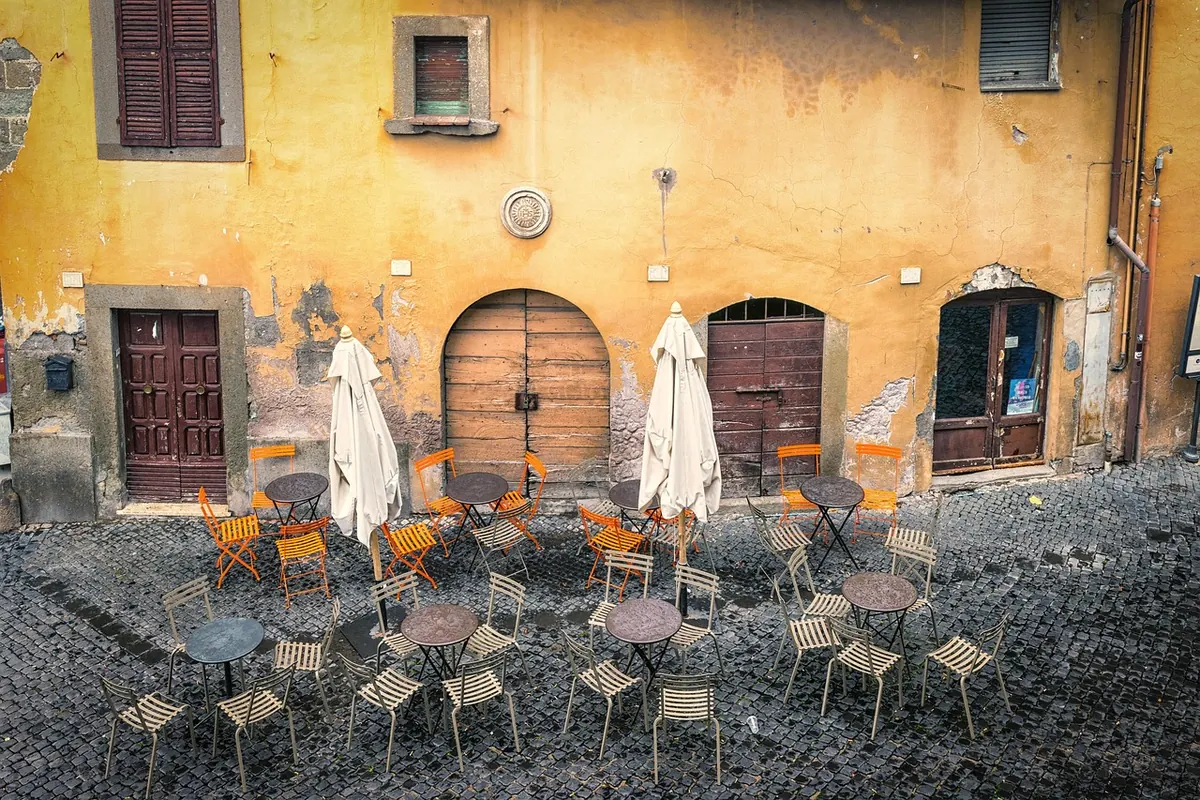
Golden hour in an Italian piazza is not one moment you can pencil in and forget. It is a short sequence of small events: the shadow of the church sliding across the cobbles, the top two floors of a ochre facade turning to honey while the street below goes blue, the first families drifting out with ice cream, the last of the light leaving the fountain. Which of those events you actually catch depends almost entirely on the month. Spring and summer hand you very different rooms to work in, and the photographers who come home with the good frames are the ones who plan for the season they are standing in rather than the one they imagined.
Two Seasons, Two Different Light
Spring is the forgiving season. The sun sets earlier, so you are not eating dinner at eleven, and it descends at a gentler angle, which stretches the transition from hard afternoon light to warm evening light over a longer stretch of time. You get perhaps forty minutes of usable gold in April and May, and the air after a rain shower can leave the stone unusually clean and the distant hills unusually sharp.
Summer compresses everything. The sun drops faster and the gold arrives later and leaves sooner — twenty minutes of real warmth, then a quick fade. What summer gives you instead is a long, sociable evening: the piazza stays full until midnight, the stone holds heat and glows from within, and the blue hour is populated rather than empty. If spring is about architecture, summer is about people.
Practical translation: in spring, aim to be shooting between roughly six and eight in the evening; in summer, between eight and half past nine. Check the actual sunset time for your town the night before — Italy runs long in the north and short in the south, and the difference between Milan and Syracuse in June is worth almost an hour of planning.
Building Your Window: A Five-Step Plan
Before you leave the apartment, decide where the light will land. This takes ten minutes and saves an evening.
- Get the sunset time for that exact date and town, then subtract ninety minutes. That is when the light starts to get interesting, not when it peaks.
- Work out the piazza's orientation on a map. A square running east to west will light one long facade at sunset; one running north to south will split diagonally.
- Find the tall obstacle. The building, bell tower or Duomo that will throw the first big shadow determines the whole rhythm of the evening.
- Arrive thirty minutes early and walk the perimeter. Note where the shadow line sits and how fast it is moving — a shadow edge can cross a small piazza in ten minutes.
- Stay twenty minutes past sunset. The gold goes, the crowd stays, and the stone turns a colour you cannot fake in editing.
Shadows: Read the Line Before You Shoot
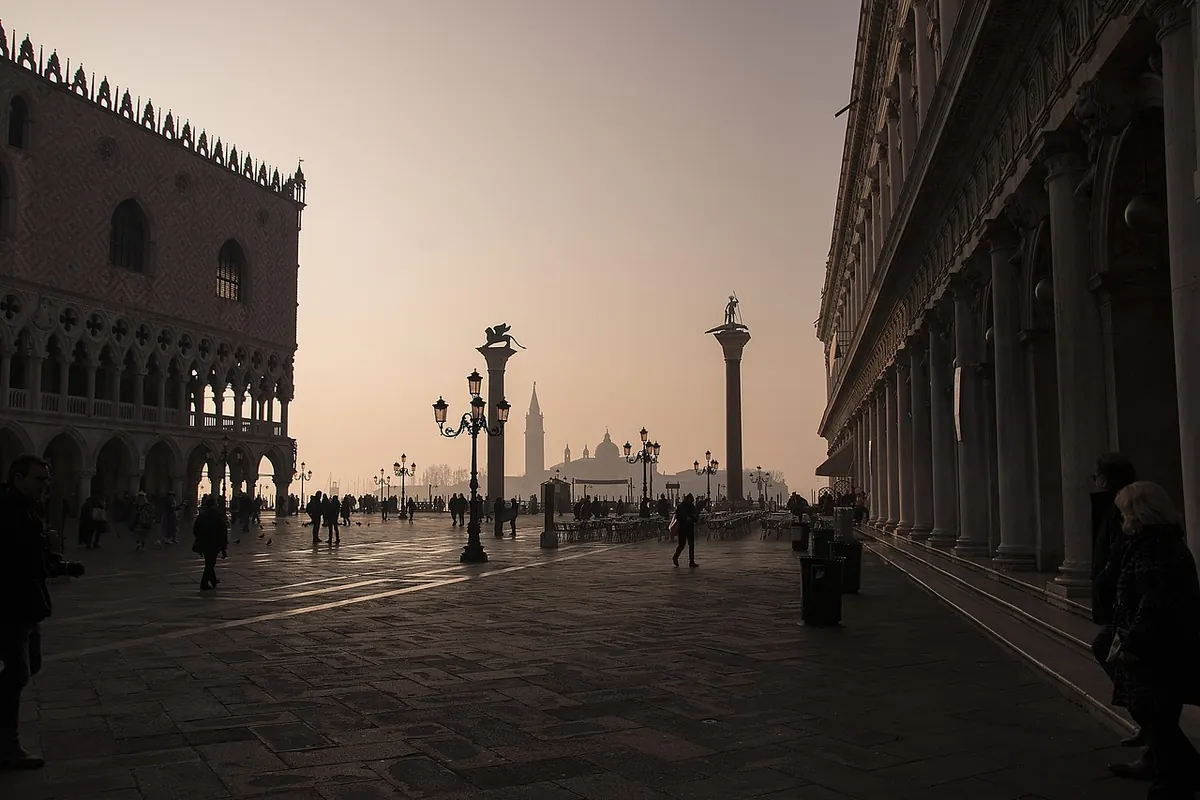
The most useful thing in a piazza is not the fountain or the facade — it is the edge of the shadow. That line is your compositional tool. It separates warm from cool, and it moves. In Piazza del Campo in Siena, the shadow of the surrounding buildings pours into the shell-shaped bowl from one side, and the curve of that edge against the red brick is a better photograph than the tower itself.
Where to stand
Put yourself inside the shadow, looking into the light, and you get a bright subject against a dark frame — good for people crossing the square. Put yourself in the light, looking across the shadow, and you get long graphic diagonals. Both work; what does not work is standing in the middle of a flat pool of light with no edge anywhere in the frame, which is why so many midday-looking photographs happen at seven in the evening.
Spring versus summer shadow
Spring shadows are longer and softer, and the line moves slowly enough that you can set up and wait. Summer shadows are harder, more contrasty, and arrive faster — expect to recompose every few minutes, and expect deep black gaps between buildings that will swallow detail. Expose for the lit stone and let the shade go dark; it looks intentional.
The Glow: What the Buildings Do at the End
Italian piazzas are unusually good at holding warm light because of what they are made of. Travertine, tufa, weathered stucco and terracotta all pick up the orange end of the spectrum and throw it back. Marble does something cooler and more silvery. Learn which material is in front of you and you will know what to expect before the light arrives.
The second act
There is a moment, roughly ten minutes before sunset, when the sun disappears behind the rooftops but the light is still high enough to catch the upper floors. The ground goes into shade, the top two storeys flare gold, and the whole square reads as a stage set. This is the single most reliable photograph in any Italian piazza, and almost nobody waits for it because the pavement has already gone dull and people start packing up. Do not pack up.
Watch the shadow climb. On a good evening you can see it move up a facade while you stand there, and if you shoot the same wall at five-minute intervals you get a sequence worth more than any single frame.
Crowds: Timing the Evening Rhythm
People arrive in waves, and the waves are readable. The post-lunch dead zone runs from about two until five, when the square belongs to pigeons, closed shutters and a couple of waiters stacking chairs — good for architecture, bad for life. From six, the first passaggiata begins: couples, grandparents, kids on scooters. Around seven thirty the aperitivo tables fill and the light is at its best simultaneously, which is the small miracle of an Italian summer evening. After nine, the character changes again: looser, louder, more young people, more movement, better for slow shutter speeds and blurred legs.
- For clean architecture: early morning, or the dead hours after lunch.
- For warmth and life: the half hour before sunset, when the two overlap.
- For atmosphere and blur: an hour after sunset, using the fountain or a cafe table as a tripod.
- For quiet: spring weeknights, which are the most underrated evenings in Italy.
The Seasonal Checklist
Run through this before you leave the house.
- Spring: a light jacket for the drop after sunset; a cloth for the lens, because April showers leave spray on the stone; a polariser for the washed-out skies and wet reflections.
- Spring: check for scaffolding — spring is repair season, and a facade under renovation will ruin the shot you came for.
- Summer: water, and more than you think; the stone radiates heat until late and there is little shade left by seven.
- Summer: a pocket tripod for the blue hour, when the exposure drops fast and the crowd thickens.
- Both: the exact sunset time written down, and a second-choice piazza in mind in case the first is hosting a concert, a market or a wedding.
Field Kit and Last Light
Travel light and stay late. One body, a moderate wide angle, and something around 85mm for compressing the crowd against a glowing wall will cover nearly everything a piazza asks of you. Keep the lens hood on to control flare from low sun bouncing off stone, and resist the urge to chase the whole square in one frame — the best pictures from these evenings are usually small ones: a shadow edge, a doorway, a waiter crossing a lit patch of pavement.
Then, when the gold has gone and the lamps come on, put the camera down for a few minutes. Buy something cold, sit on the steps, and watch how the square fills. The photograph you will want tomorrow is usually the one you notice from a chair, not the one you planned at the kitchen table.
Photo: Ri_Ya / Pixabay
You Might Also Like
A hour-by-hour guide to the Italian piazza, from the sweepers at dawn and the commuter crush to the gelato queue, the dinner tables and the last lingering customers.
A practical guide to opening conversations in an Italian piazza — the timing, the first sentence, the listening habits, and the graceful exit that turn a passer-by into a welcome presence.