A Checklist for Visiting a Piazza During Festival Season
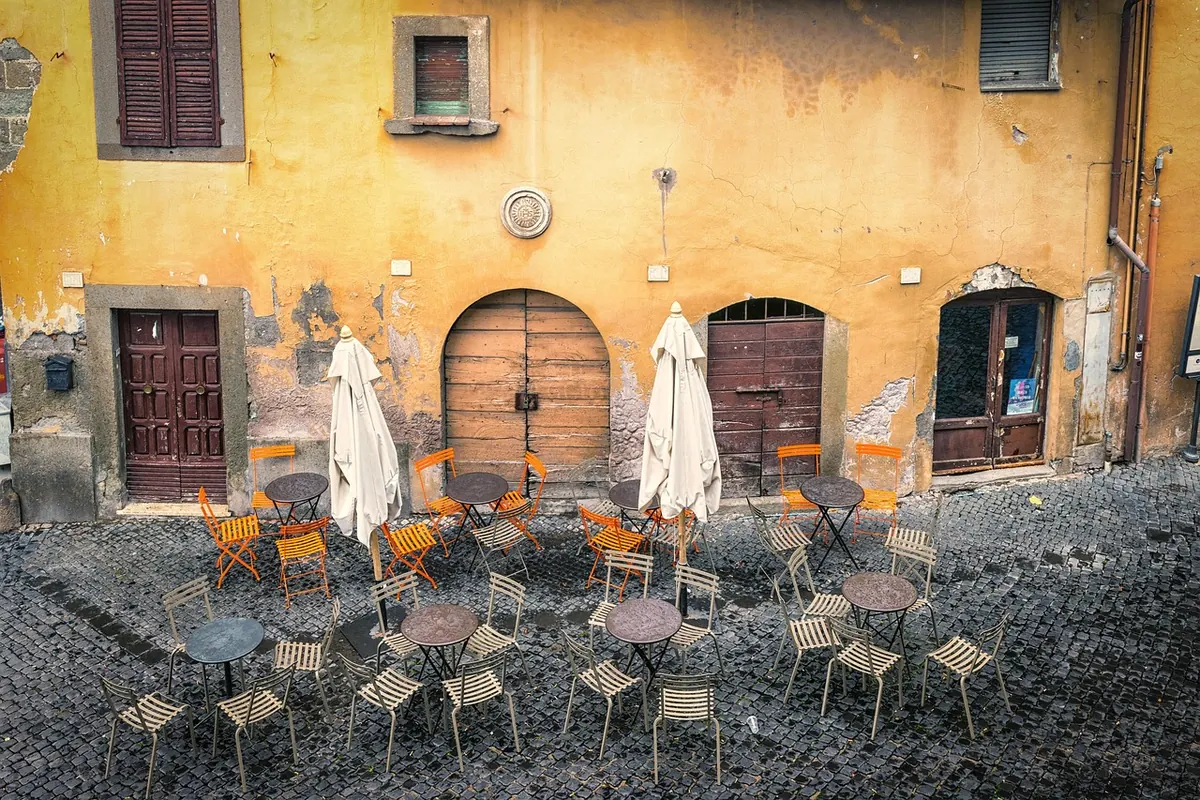
A piazza in festival season is a different creature from the one you photographed in March. Tables appear, string lights go up, a band tunes somewhere behind the church, and a square that was mostly a thoroughfare becomes a living room with a few hundred extra guests. That transformation rewards a little preparation. Not a spreadsheet — just enough foresight that you spend the evening watching the procession instead of hunting for a parking space or a toilet.
Start With the Calendar, Not the Map
Most Italian festivals are tied to a date that will not move for you: the patron saint's feast, the harvest, Ferragosto on 15 August, the sagra that always falls on the same weekend of the same month. Find the actual programme before you plan anything else. These days it usually circulates as a photographed poster on the comune's website or a local Facebook page, and it is worth reading closely, because the timings are rarely what visitors assume.
A procession may leave the church at six in the evening and come back long after dark. Food stalls often open at seven and sell out by half past nine. The band might start at ten, the fireworks at midnight, and the square may be completely empty again by lunchtime the next day. Ask yourself two questions: what do I most want to see, and how long does it last? Then build the rest of the day around that single thing.
If the answer is the infiorata — the flower-petal carpets laid through the streets — go early in the morning, while the petals are still fresh and the volunteers are on their knees finishing the last panel. If it is the fireworks, plan how you will leave afterwards, because the streets around the piazza will be full of people walking in the same direction. And if it is the food, arrive at opening time. The first hour is calm, the queue is short, and the person behind the griddle has time to tell you what you are eating.
Reading the Crowd
Festival crowds have a rhythm, and it is not the same as a concert crowd. Families with small children come early, claim the tables nearest the church steps, and leave before the music gets loud. Older residents arrive around the same time and sit at the edges, on the benches, at the bar's outside tables, watching. Teenagers turn up later and stay to the end. Tourists tend to drift in somewhere in the middle and stand exactly where everyone needs to walk.
So arrive thirty or forty minutes before whatever you came for, and stand at the edge of the square rather than the centre. Edges give you a view, a wall to lean on, an exit route, and a bit of air. Avoid planting yourself in front of a bar doorway, a shop entrance or someone's chair; in a small piazza, those few square metres are effectively private property. When the procession appears, everyone takes a step back. Do the same, and leave a metre of space in front of you. It is the difference between watching a ritual and blocking it.
If you are with other people, agree on a meeting point before you get separated — the fountain, the pharmacy sign, the corner where the street opens up. Phone signal in a packed square is unreliable and the noise makes calls useless. A fixed place and a fixed time solves more problems than any app.
Eating at the Stalls Without Regrets
Food is where most visitors make their one avoidable mistake: they queue at the first stall they see, order too much, and then find three better stalls further along. A few habits help.
- Follow the local queue. A long line of people chatting with each other, greeting neighbours and complaining about the wait is usually a good sign. A stall with a laminated photo menu and no queue is often there for the visitors.
- Order what is being made in front of you. If someone is shaping dough and dropping it into oil, that is the thing to eat. Menus that list twenty items are rarely doing all of them well.
- Start small. Portions at a sagra are generous and the prices modest. Buy one thing, eat it, then decide. You can always go back.
- Carry cash. Many stalls are run by associations, parishes and families, and card machines are not guaranteed. Small notes and coins make everything faster.
- Ask about ingredients. If you avoid meat, dairy or gluten, ask directly at the counter rather than assuming. Home cooks are usually happy to explain what is in a dish, but they will not think to volunteer it.
One more thing: eat standing at the trestle tables, not while walking through the middle of the square. In a crowded piazza, a paper plate of something hot and a procession moving towards you is a bad combination.
The Square Is Someone's Living Room
Half the people around you are not at an event. They are at home, and their home happens to be full of visitors for the weekend. That framing settles most questions of behaviour.
If a church is open, step in quietly, cover shoulders and knees, and put the phone away during Mass. Do not treat the steps as a picnic spot if a service is going on. If you want a photograph of the people in costume, ask first — most will say yes and pose, and the picture will be better for it. Drones are usually unwelcome and often prohibited; leave them at the hotel. And follow the procession rather than cutting across it. The people carrying the statue have been rehearsing this for weeks, and the ones walking behind may have been doing it since childhood.
Being a good guest in a festival square mostly comes down to noticing what everyone else is already doing, and not being the one exception.
The Small Practical Layer
The cobbles are uneven and often slick with spilled drinks. Wear shoes you can walk in and stand in for three hours, not the ones you dressed for. Bring water if it is summer; a light layer if it is September and the evening turns cool after ten. Tissues are worth carrying. A portable charger is worth carrying too — photographing a lit-up square drains a phone fast.
Toilets are the eternal question. Bars around the piazza are the reliable answer: buy a coffee or a drink, use the facilities, and treat it as the price of comfort. Public toilets, where they exist, are busiest just before the fireworks. Roads in the centre will be closed to traffic, sometimes without much notice, so park outside the pedestrian zone and walk in — it is usually faster than circling.
A Ten-Minute Check Before You Set Off
- Confirm the day and the start time from an official local source, not a travel blog.
- Note the one thing you most want to see, and the time it begins.
- Decide how you are getting there and back — walking, if at all possible.
- Take cash, water, tissues and shoes you can stand in.
- Agree a meeting point with your group.
- Arrive early, take the edge of the square, and stay off the processional route.
None of this is complicated, and none of it takes long. The point of preparing is not to control the evening — you cannot, and you should not want to. It is to clear away the small frictions so that the thing you remember is the lanterns coming on over the square, the smell of frying dough, and the moment the band starts up and the whole piazza turns to look.
Photo: Randy_Puh / Pixabay
You Might Also Like
A hour-by-hour guide to the Italian piazza, from the sweepers at dawn and the commuter crush to the gelato queue, the dinner tables and the last lingering customers.
A practical guide to opening conversations in an Italian piazza — the timing, the first sentence, the listening habits, and the graceful exit that turn a passer-by into a welcome presence.