From Empty Dawn to Late Night: An Explainer on Who Uses the Piazza and When
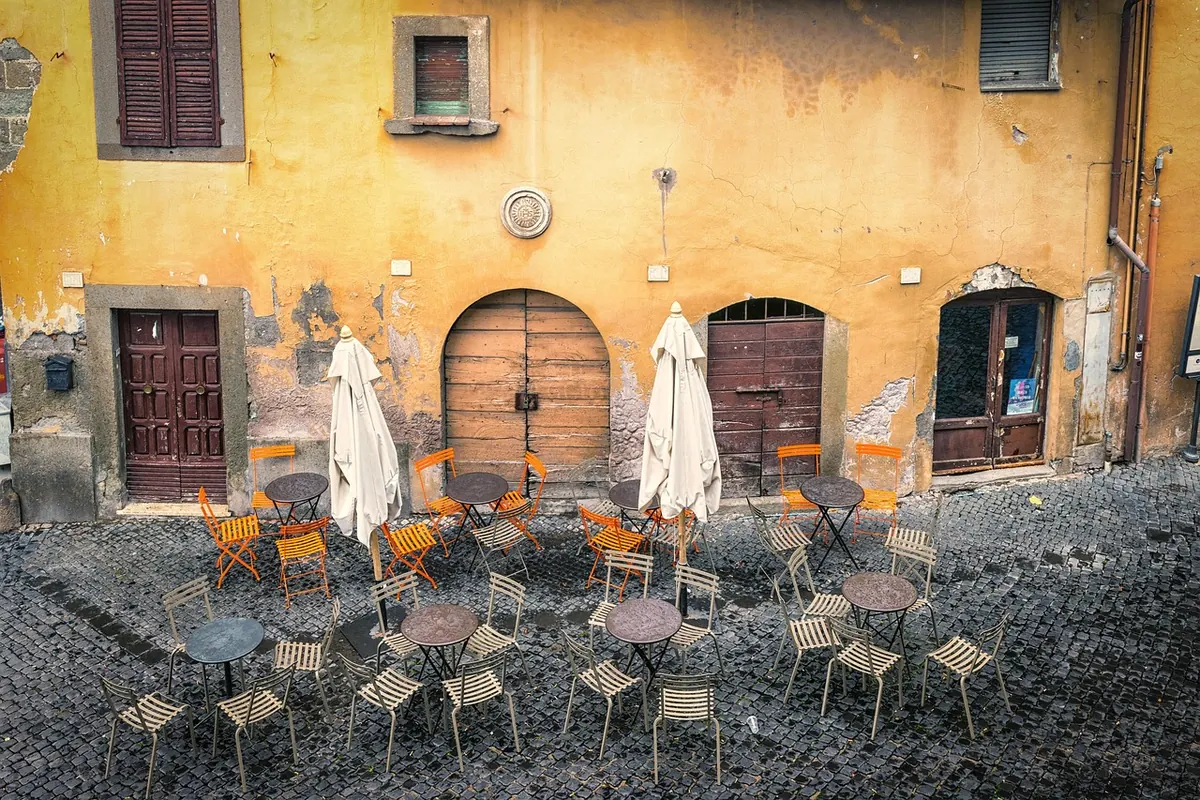
At half past five in the morning a piazza belongs to nobody. The chairs are stacked and chained, the fountain runs for an audience of pigeons, and the only footsteps belong to someone in a high-visibility jacket pushing a broom and a wheeled bin. Twelve hours later the same slabs of stone will hold three hundred conversations, two dogs, a child wobbling on a scooter and the smell of frying oil. Same square, different room.
Anyone who wants to use a piazza well — to eat there, sit there, take photographs, or simply enjoy it without being elbowed — benefits from knowing who has booked it, hour by hour. The schedule is not written on any sign, but it is remarkably consistent from one town to the next.
Before Dawn: Brooms, Crates and the First Espresso
The square's working day starts with the people nobody photographs. Sweepers work the edges first, then the centre, hosing down the stones where the pigeons have been. A small van noses in with crates of milk, brioche and beer; the newspaper bundle lands outside the edicola with a slap. Somewhere in the corner the bar owner lifts the metal shutter, and that is the moment the piazza switches back on: one lit window, then the smell of coffee.
Between about six and half past seven the bar counter is the only social life in town. Bus drivers, nurses coming off a night shift, bakers finishing their work, a couple of men in overalls who have clearly done this every morning for thirty years. They stand, they drink, they leave. If you are visiting and want a sense of a place without any performance, this is the hour. Order a cappuccino and a pastry at the counter and stand with everyone else.
The Commuter Window
From roughly half past seven to half past nine the piazza is a corridor, not a destination. People cross it with purpose: to the bus stops on the far side, to the ticket machine, to the school door around the corner, to the bank before it opens. Buses idle at the edge with that particular diesel rumble, parents hand over backpacks, scooters weave between pedestrians who have learned not to look.
Practical consequence: if you are chasing an empty photograph of the church facade, this is not your hour. If you want to understand how the town actually functions — which side the buses stop on, where the school traffic goes, which bar serves fastest — this is the best free lesson available. Take a table at the edge, order something small, and watch for twenty minutes.
Late Morning: Market Barrows and Bench Regulars
By ten the commuters have gone and the square changes character again. Most Italian towns set out a market once or twice a week, and on those mornings the piazza fills with three-wheeled Ape vans, trestle tables, crates of tomatoes, and the flat, carrying call of the fruit seller. Arrive before eleven for the good produce and the shorter queue; arrive at half past twelve and you will find the stallholders packing up while the last customer argues about change.
On non-market mornings the piazza belongs to a slower population. The benches along one side — almost always the shaded side — host a rotating cast that starts arriving around ten and thins out at lunch.
The bench economy
Watch for a while and a pattern emerges. The retired men who arrive first and stay longest, treating the bench as an office. The woman who feeds the stray cats at the same time every day, whatever the weather. The two friends who meet to read the paper and comment on it. The grandparent killing time before a pickup. Nobody has reserved anything, but everybody knows where they sit. If you take a bench seat, sit at the end, not in the middle of a cluster.
The Lunch Turnover
Between half past twelve and half past two the piazza does its sharpest trade of the day. Restaurant staff drag tables and chairs out of the doorway, wipe them down, and within ten minutes the whole edge of the square is a dining room. Offices empty, shopkeepers flip their signs to chiuso, and the pizzetta counter does a brisk standing trade in slices and supplì.
Lunch is also the most time-sensitive part of the day. In much of Italy, kitchens close in the mid-afternoon and do not reopen until the evening, so a late arrival at four o'clock may find nothing but a bar with a toaster. If you plan your day around food, eat lunch between one and two and treat the afternoon as a fallback zone of panini and ice cream. Check the door before you commit — a handwritten orario taped to the glass beats any assumption.
The Quiet Hours and the School Run
By three the piazza is at its emptiest. Shutters are half down, the stone is hot, the fountain is the loudest thing in it. Two or three people sit in the shade doing nothing at all, and it is the only part of the day when you can hear your own footsteps cross the square.
Then school comes out, and the whole space is repopulated in about ninety seconds. Children with backpacks bigger than they are, grandparents doing pickup duty, a football against a wall if the square is wide enough to permit it, scooters, arguments, ice cream money. The afternoon bar does a fast trade in granita and coffee, and the first aperitivo drinkers appear around six, which is when the metal chairs come back out for good.
Evening into Night: Passeggiata, Families and Diners
The evening is the piazza's main performance, and it unfolds in stages.
The passeggiata and the gelato queue
From about six to eight, people walk. Not to anywhere — around the square, up the main street, around the square again. Couples, teenagers in groups, elderly couples arm in arm, families with small children. Bars put out more tables, spritz glasses appear in rows, and the gelateria starts forming a queue that peaks somewhere around nine, when the last families are out and pyjama-clad children are being carried home.
After dark: diners and the last table
Restaurants fill later than visitors expect. In most places the serious dinner seating runs from about half past eight to half past nine, later in summer and in the south. By ten the piazza has split into zones: the dining tables, the bar crowd standing in the corner, the last few people on the benches, the dog walkers making the final circuit.
The final hour is the best one for a quiet drink and a bad one for a loud conversation. Around midnight the first shutters start coming down, staff stack chairs with a clatter that echoes off the stone, and the sweepers — or their evening equivalent — return. The square is handed back to the pigeons and the fountain.
Timing Your Own Visit
With the day mapped out, a few practical rules will make your own time in the piazza easier.
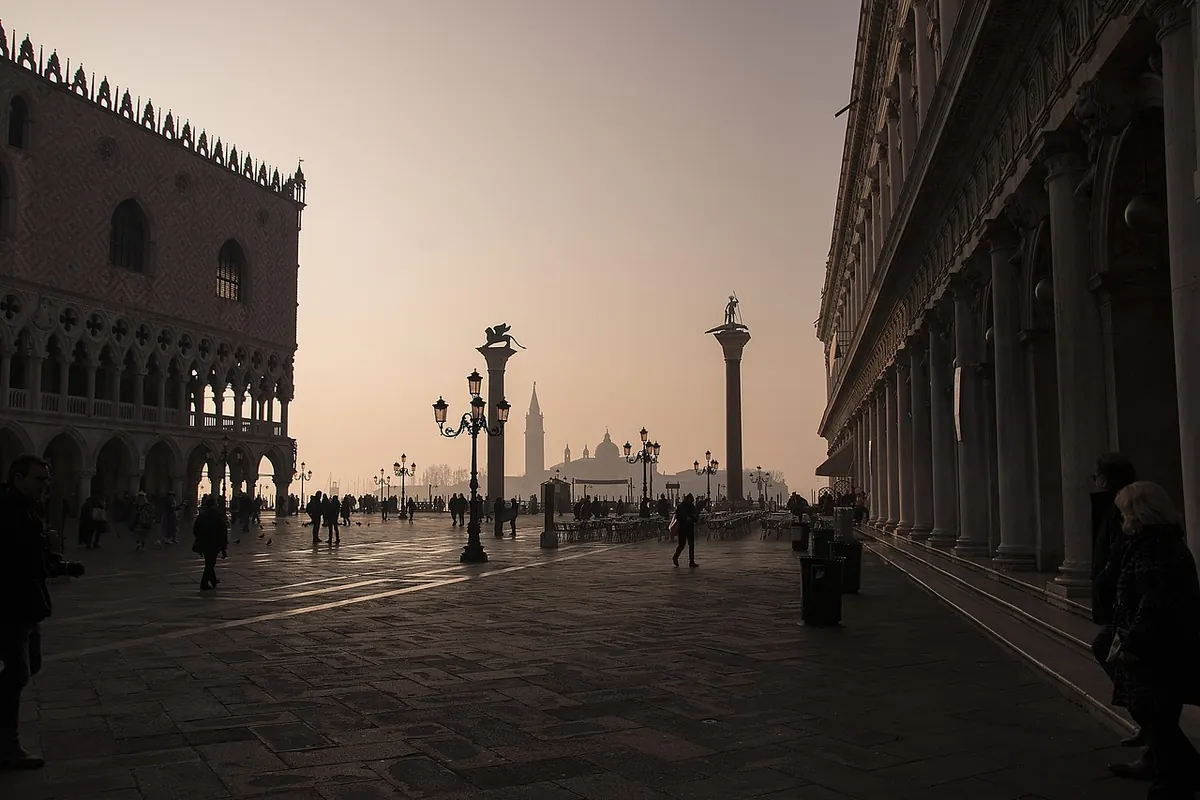
- Empty photographs: before eight in the morning, or between three and half past four in the afternoon.
- Coffee like a local: before half past eight, standing at the counter. It costs less and takes four minutes.
- Lunch: one o'clock is the sweet spot. Do not assume food is available at four.
- Dinner: half past eight or nine unless you know otherwise. Turning up at seven usually means an empty room or a closed kitchen.
- Families with children: the early evening, roughly six to eight, when the square is full of other families and nobody minds a scooter.
- Quietest hours: mid-afternoon and after midnight.
One last thing, and it matters more than any timetable: this is not a monument, it is a living room with a fountain in it. Lower your voice after eleven, don't eat a picnic on church steps, and if a bench is occupied by the same three people every morning, find another bench. Read the square correctly and it will make room for you.
Photo: Tama66 / Pixabay
You Might Also Like
A practical guide to opening conversations in an Italian piazza — the timing, the first sentence, the listening habits, and the graceful exit that turn a passer-by into a welcome presence.
Practical, unhurried advice for getting the timing, crowds, food stalls and small courtesies right when a piazza turns into a festival — so you can watch rather than worry.