How to Start a Friendly Conversation with Locals in the Piazza Without Sounding Like a Guidebook
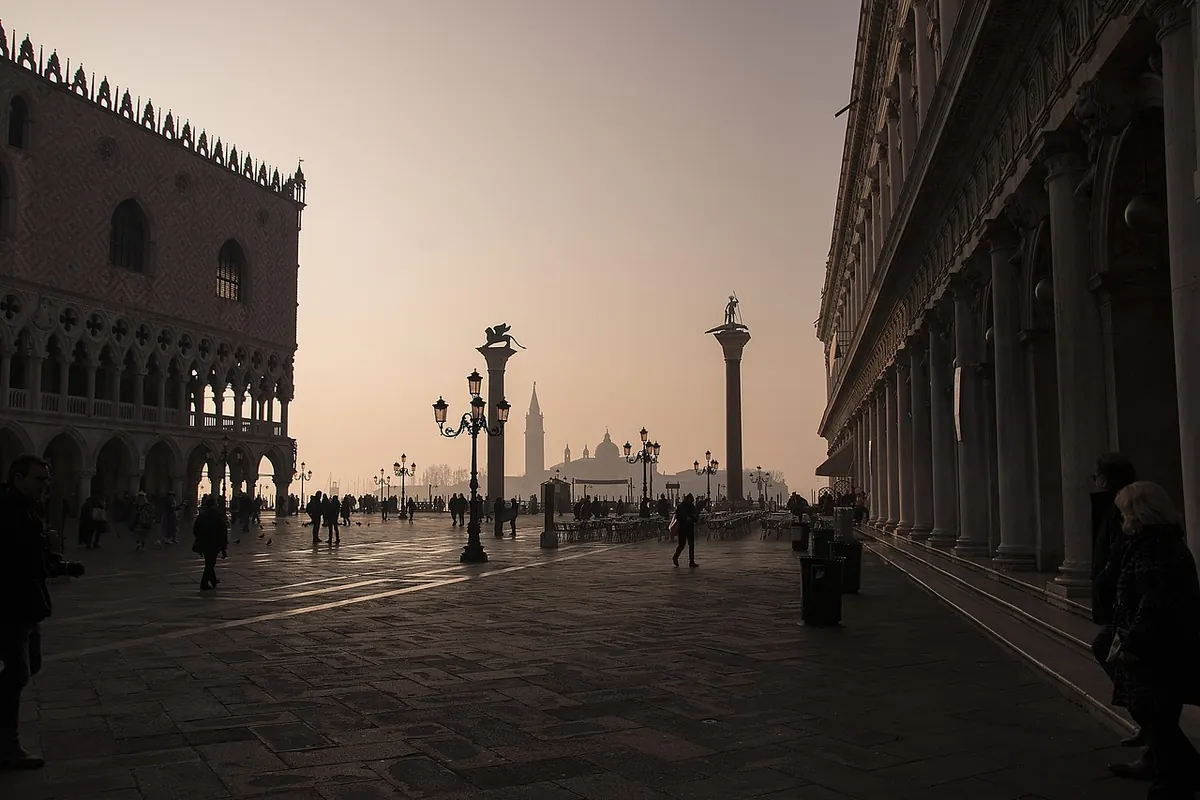
The piazza at seven in the evening is a different place from the piazza at noon. Chairs get dragged out of doorways, dogs are greeted by name before their owners are, and the same four men have been arguing about the same card game for decades. Walk through with a camera in one hand and a checklist in the other and nobody will be rude to you. They will simply let you pass, the way you let a delivery van pass.
That is the first thing worth understanding. A piazza is not a public square that happens to be Italian; it is a shared living room with a fountain in the middle. Conversation there follows living-room rules. You do not march up to a stranger and ask them to explain their culture. You settle nearby, you notice something, you say something small, and you see what comes back. The rest is patience.
Read the piazza before you join it
Two minutes of quiet looking will tell you more than a week of phrase drills. Who is sitting where, and why. The bench in front of the bar belongs to the men who argue about football; the steps in the shade belong to whoever got there first; the arcade belongs to the teenagers and the pigeons. Seating is not assigned, but it is not random either.
Look for the people who are already watching the square rather than talking to each other. Someone alone with a dog, someone on the end of a bench with an open posture, a shopkeeper standing in a doorway with nothing to do for the next five minutes — these are the easy doors. Two people leaning toward each other with their shoulders turned in are having a private conversation in public, and they will be polite and closed.
- Late morning suits the older crowd; late afternoon belongs to parents and small children; the evening belongs to everyone.
- Sit on the next seat of the bench, not the same café table. Distance you can close is friendlier than distance you have already crossed.
- Choose pairs and singles over groups of four or more. Groups have an inside joke you cannot enter.
- If someone is working — serving, sweeping, carrying — wait. They will still be there in ten minutes.
Open small, open specific
The sentence that kills a conversation before it starts is some version of "Can you tell me about Italian life?" It is too large to answer and it makes the person you are speaking to into a representative of something. The sentence that starts one is almost always tiny, and it is about the thing you are both already looking at.
Openers that work
"Buonasera. Is this the same card game every night?" "Scusi, does that dog ever lose an argument?" "Do you know if this fountain is drinking water?" "Is the market here on Saturdays, or have I missed it?" Each of these has three virtues: it is answerable in one line, it is about something present, and it does not require the other person to perform their culture for you.
Start with the greeting, then stop. Buongiorno until mid-afternoon, buonasera after that, and scusi to get someone's attention. Say it, pause, let them look at you, and only then add the question. That half-second of silence does a lot of work: it turns an approach into an introduction.
Do not apologize for your Italian
Use whatever Italian you have, even if it is four words and a gesture. If the answer comes back in English, take it gratefully and keep going. What people respond to is the willingness to try, not the accuracy. Announcing that your Italian is terrible before you have said anything useful makes the other person do the comforting, and that is a strange thing to ask of a stranger on a bench.
Let the square carry the conversation
The great advantage of a piazza is that you are not facing each other across a table with nothing between you. You are both watching the same scene: the man carrying a mattress, the child on a scooter, the light moving across the plaster, the argument at the card table that has just escalated. Shared attention is the easiest conversation in the world, because neither of you has to invent the next subject.
Comment on what happens rather than asking what you should see. A remark about the heat, the approaching storm, the team on someone's shirt, the way the whole square empties at one o'clock — any of these is an invitation, not an interrogation. You are joining the audience of a play that has been running for centuries, and the audience always talks.
Ask fewer questions, listen harder
Most visitors over-ask. Three questions in a row turns a conversation into an interview, and the person answering starts to feel like an information desk. Ask one thing you actually want to know, then react to the answer before you ask anything else.
The follow-up is where warmth lives. If they say they have lived on the street for forty years, do not move on to your next prepared question — stay there. "Forty years. Has the square changed much in that time?" That single move, following the thread they handed you, is worth more than any list of topics.
The one-question rule
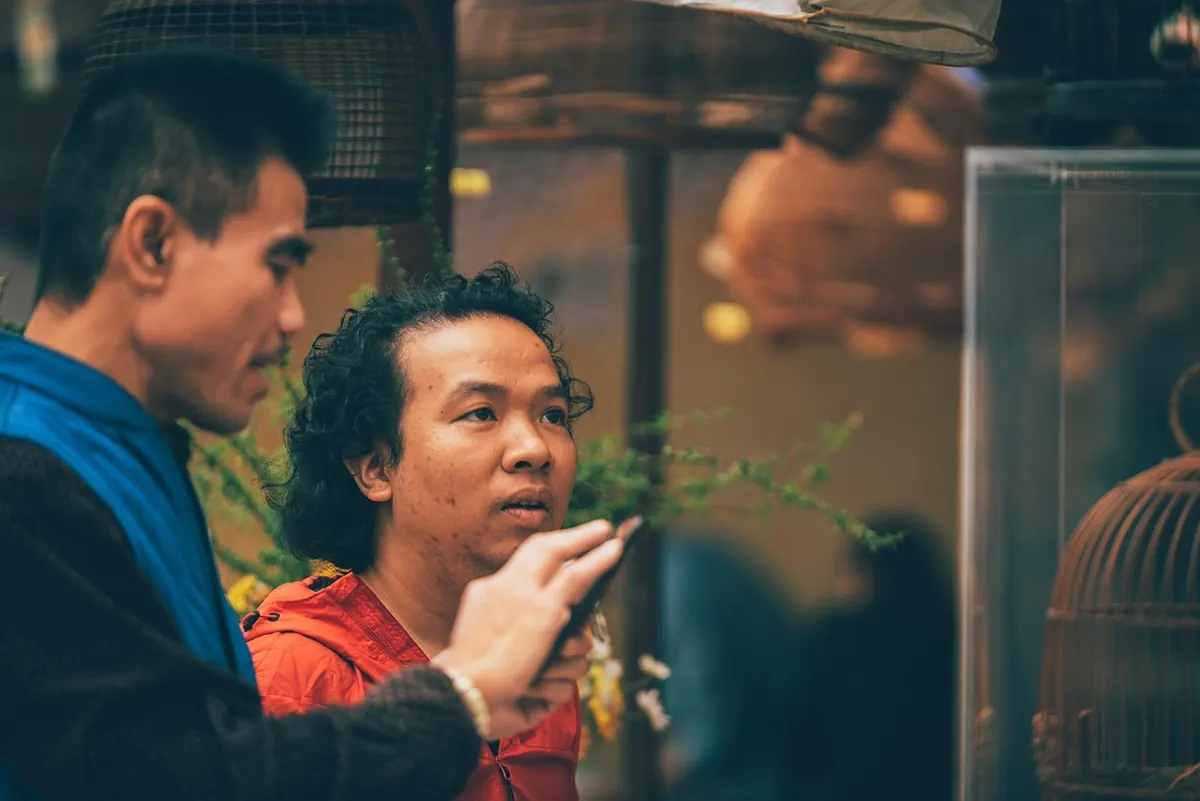
Try this: for every question you ask, offer two statements. "It's much quieter than I expected." "I've been sitting here an hour and I still can't work out how the card game is scored." "My grandmother used to do the same thing with her hands when she was making a point." Statements give the other person something to agree with, correct or laugh at. Questions only give them work.
Then listen properly. Nod, make the small sounds that mean go on — ah, certo, davvero — and let silences sit for a beat longer than feels comfortable to you. Do not fill every pause. Do not correct their English, and do not correct their opinions about your country either; you are not there to win, you are there to be welcome. If they tell you a story that runs long, let it run. People remember who listened.
Notice the exit signs
A conversation in a piazza ends as casually as it begins. Someone turns back to their friend, checks their phone, stands up, says va bene to nobody in particular. None of this is rejection. It is simply the rhythm of a place where people talk in short bursts and then return to watching.
Learn to leave well yourself. Finish on the good part, thank them, wish them a good evening, and go. Do not extract a phone number, do not ask for a photo together, and do not photograph people without asking. If someone buys you a coffee at the bar, the return is expected eventually and soon, and it should stay modest — the gesture matters, not the price. And if you are refused, take it lightly. A polite nod and a turned shoulder is an answer, and it costs you nothing to accept it.
A few things to carry with you
- Arrive without a purpose. People can tell the difference between someone lingering and someone working through a list.
- Say the greeting, pause, then ask one small thing about what you can both see.
- Trade two statements for every question, and follow the thread you are given.
- Go back to the same square on the same days. Third time is when you stop being a visitor and become someone whose face is known.
- Leave while it is still going well, and say buona serata on the way out.
None of this requires fluent Italian or a talent for talk. It requires the ordinary courtesy of noticing where you are and who was there first. Do that, and the piazza does the rest — as it has for everyone who ever sat down on the edge of it and waited a moment before speaking.
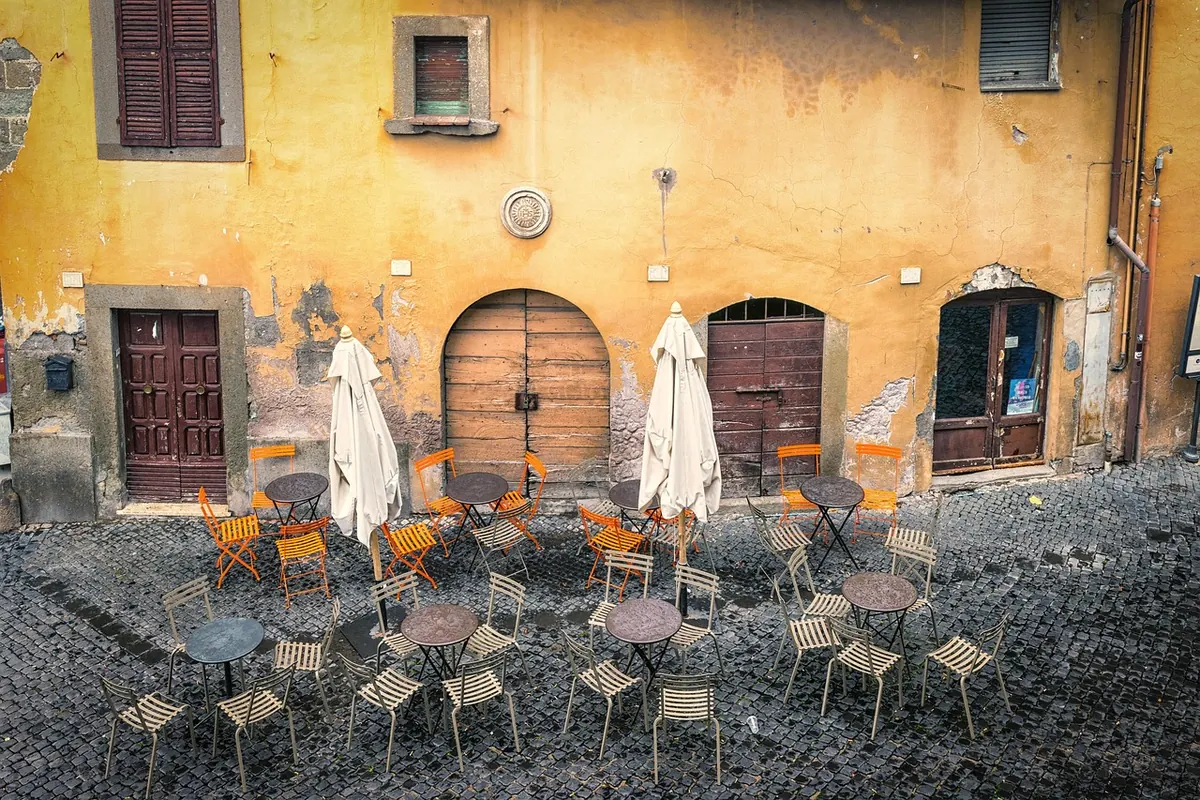
Photo: DuyCuong1080 / Pixabay
You Might Also Like
A hour-by-hour guide to the Italian piazza, from the sweepers at dawn and the commuter crush to the gelato queue, the dinner tables and the last lingering customers.
Practical, unhurried advice for getting the timing, crowds, food stalls and small courtesies right when a piazza turns into a festival — so you can watch rather than worry.