A Beginner's Guide to Ordering Coffee at a Piazza Bar
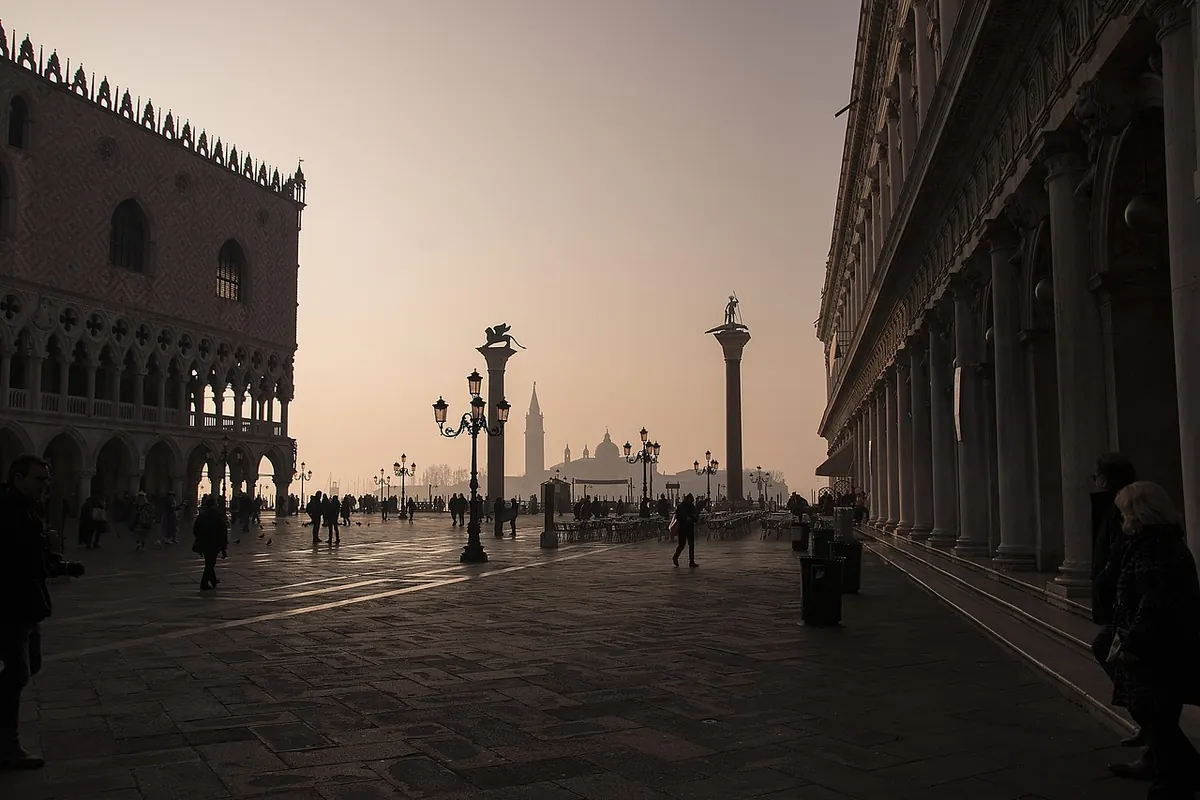
Eight in the morning, a piazza in almost any Italian town. A man in a linen jacket says “un caffè” without looking up from his phone, drinks it in two sips, sets the cup down and is gone. Behind the counter the barman has already pulled the next shot. Nothing about this looks difficult, and nothing about it is obvious the first time you try it. Where do you pay? Do you sit down? What actually arrives if you ask for a latte? The answers are simple, but they are local, and nobody hands you the rulebook when you arrive.
What follows is the working knowledge you need to order at a piazza bar without feeling like you are interrupting something. It is not a list of rules so much as a description of how the room usually works — which is the fastest way to stop being a spectator and start having your coffee like everyone else.
The cassa, the banco, and the two-step order
Almost every bar is organised around two points: the cassa, where money changes hands, and the banco, the counter where the coffee is made. In busy bars — near a station, under an arcade, in the middle of a city — you pay first. You say “un caffè, per favore” to the person at the till, take your receipt, the scontrino, and carry it four steps to the counter, where you repeat the order and hand the paper over. The barista may not even glance at it. Keep it in your hand anyway, or set it on the counter, until the cup is in front of you.
In smaller bars, and almost everywhere at quiet hours, the order runs the other way: go straight to the counter, ask for what you want, drink it, and pay on the way out — “il conto, per favore” if the total isn’t obvious. There is rarely a sign telling you which system is in force. Read the room instead. If a queue is forming at a till near the door, join it. If people are standing at the counter with cups in their hands and no paper, order first. Get it wrong and you will be corrected in three words, and no one will remember it five minutes later.
Standing or sitting: two different transactions
The same espresso can cost noticeably different amounts depending on where your elbows are. Standing at the counter is the default, the cheapest and the fastest; sitting at a table is a service, and services are billed. Some bars print two price lists, one for the counter and one for table service. Others fold the difference into the bill without announcing it. Either way, the rule of thumb holds: the further you are from the coffee machine, the more you pay.
- Al banco — you stand, you drink, you leave. Two minutes, sometimes less. This is where the rhythm of the place lives, and where the coffee is at its best, because it is being made constantly.
- Al tavolo — a waiter comes to you, takes the order, brings the coffee and expects you to pay at the end. There is usually a small surcharge for this, and it rises with the view.
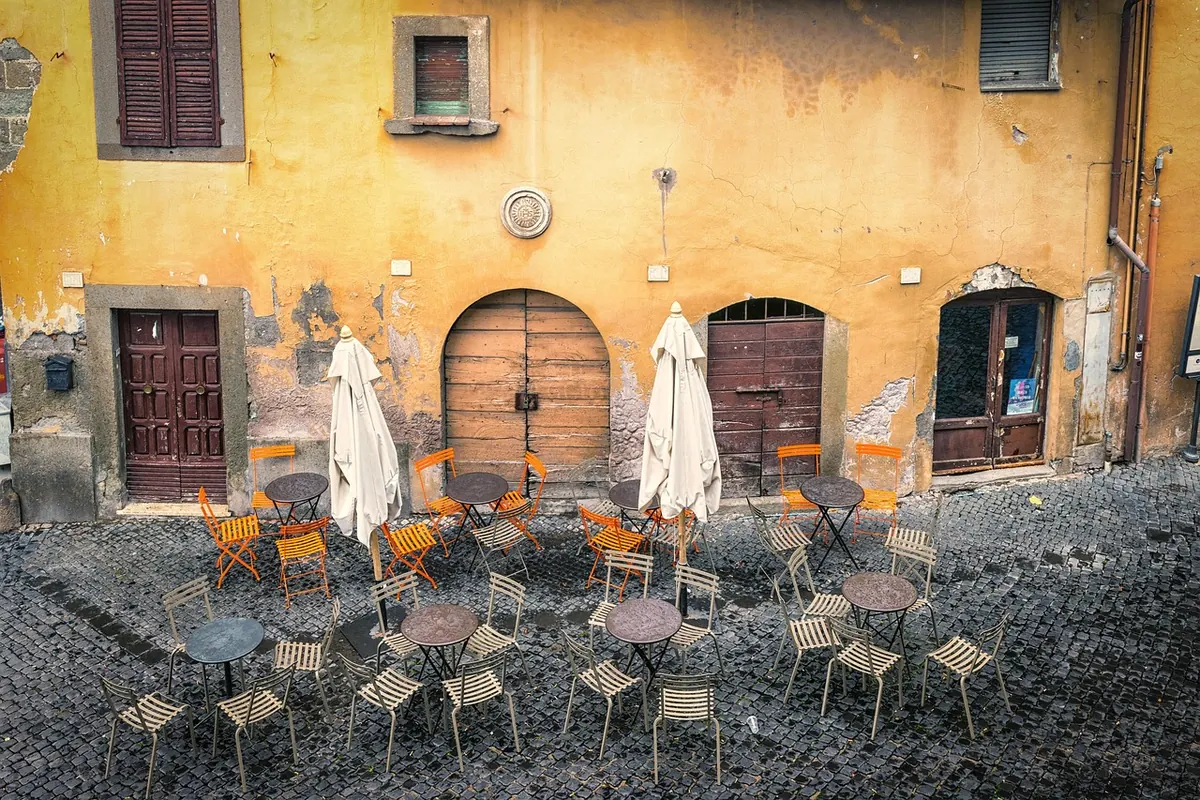
- The outdoor tables on the piazza — the most expensive seats in the house and often the reason you came. Worth it once, ideally in the late afternoon with something cold in front of you.
- The middle option — a few bars have high stools or a narrow ledge where you can perch with a coffee without triggering full table service. If unsure, ask “posso sedermi qui?” before you settle in.
What to order: a short working vocabulary
Learn one thing first: “un caffè” is not a filter coffee, a mug, or anything with milk in it. It is a single espresso in a small cup, and it is what most people in the room are drinking. Everything else is a variation on that idea.
- Caffè — espresso. Say it plainly and you will get it.
- Ristretto / lungo — the same shot, shorter or longer in the cup.
- Macchiato — espresso “stained” with a drop of milk. Ask for it caldo or freddo depending on whether you want the milk steamed or cold.
- Cappuccino — espresso with steamed milk and foam, in a larger cup. Quality varies wildly; a good one is a pleasure, a lazy one is a bowl of warm foam.
- Caffellatte — much more milk than a cappuccino, and usually served in a taller cup or glass. Note that ordering “un latte” on its own will get you a glass of milk.
- Latte macchiato — the reverse of a macchiato: a glass of hot milk with the espresso poured in at the end.
- Marocchino — espresso, cocoa powder and a little milk foam, in a small glass. Common in the north-west, and a fine mid-morning order.
- Corretto — espresso “corrected” with a drop of grappa or sambuca. Not a breakfast drink, whatever the man at the bar suggests.
- Shakerato — espresso shaken hard with ice and sugar until it turns into a cold, foamy summer drink. Ask for it in July.
- Decaffeinato — decaf, often shortened to “un deca”.
- Orzo or ginseng — barley and ginseng versions of the same drink, both without caffeine, both perfectly normal to order.
- In vetro — served in a glass rather than a cup. A useful phrase if you want to sound less like a visitor.
Food works the same way: a cornetto in the north, a brioche in the south, both eaten standing, both gone before the coffee cools. Later in the day, the counter turns into a lunch stop — tramezzini, small sandwiches, a slice of pizza — and then, around six, into an aperitivo bar where the coffee machine goes quiet for an hour.
The cappuccino question, and other quiet conventions
Italians mostly drink milk-based coffee in the morning. A cappuccino after a large lunch or at nine in the evening will not be refused, and no one will be rude about it — you will simply be marked, gently and permanently, as a visitor. If you want one at four in the afternoon, order it. Just know that the espresso is the local default, and the room will notice the difference.
Two more small things. A glass of water often arrives with your coffee unprompted; if it doesn’t, ask for “un bicchiere d’acqua” and you will get one. And sugar is usually on the counter for you to add yourself, so there is no need to specify it in advance — though “con zucchero” is understood if you are ordering at a table.
Rituals that make you look less lost
Say good morning. “Buongiorno” on the way in and “grazie” on the way out costs nothing and changes the temperature of the exchange, especially in small towns where the bar staff know everyone. Order in a way that matches the speed of the room: the machine is loud, the queue is short, and a long explanation is worse than a two-word order.
Tipping is not expected at the counter. Rounding up, or leaving a coin on the table, is a normal small kindness and not a requirement. Do not sit at a table waiting for someone to notice you at a bar that clearly runs on counter service — and conversely, do not queue at the till in a place where a waiter is already heading towards you.
A few regional shorthands worth knowing
Ordering changes subtly as you move around the country, and the differences are one of the pleasures of the trip. In Naples, “un caffè” is espresso at its most intense, and you may come across the caffè sospeso — a coffee paid for in advance by one customer for a stranger who needs it. In Rome, the marocchino is a morning habit and the counters are fast and unsentimental. In Trieste, coffee is ordered in a glass by default and the local shorthand is different again. None of this needs to be mastered. It only needs to be noticed, which is most of what a piazza bar is for.
Your first order, step by step
- Walk in, say “buongiorno”, and look for the till.
- If there is a queue at the cassa, pay there first and keep the receipt. If not, go to the counter.
- Say “un caffè, per favore” — or your variation. Add “al banco” if you want to be clear you are standing.
- Drink it where you are. Add sugar at the counter if you want it. Ask for water if none appears.
- Pay — at the till with your receipt, or at the counter on the way out — and say “grazie, arrivederci”.
- If you want to sit, ask first, and expect to pay a little more for the chair.
Do that twice and the piazza bar stops being a puzzle. By the third morning you will have your order out before the barista asks, and you will understand why nobody in the room is in a hurry and everybody is finished in three minutes. That is the whole trick of the place: it gives you a small, perfect ritual, and then it gives you back your day.
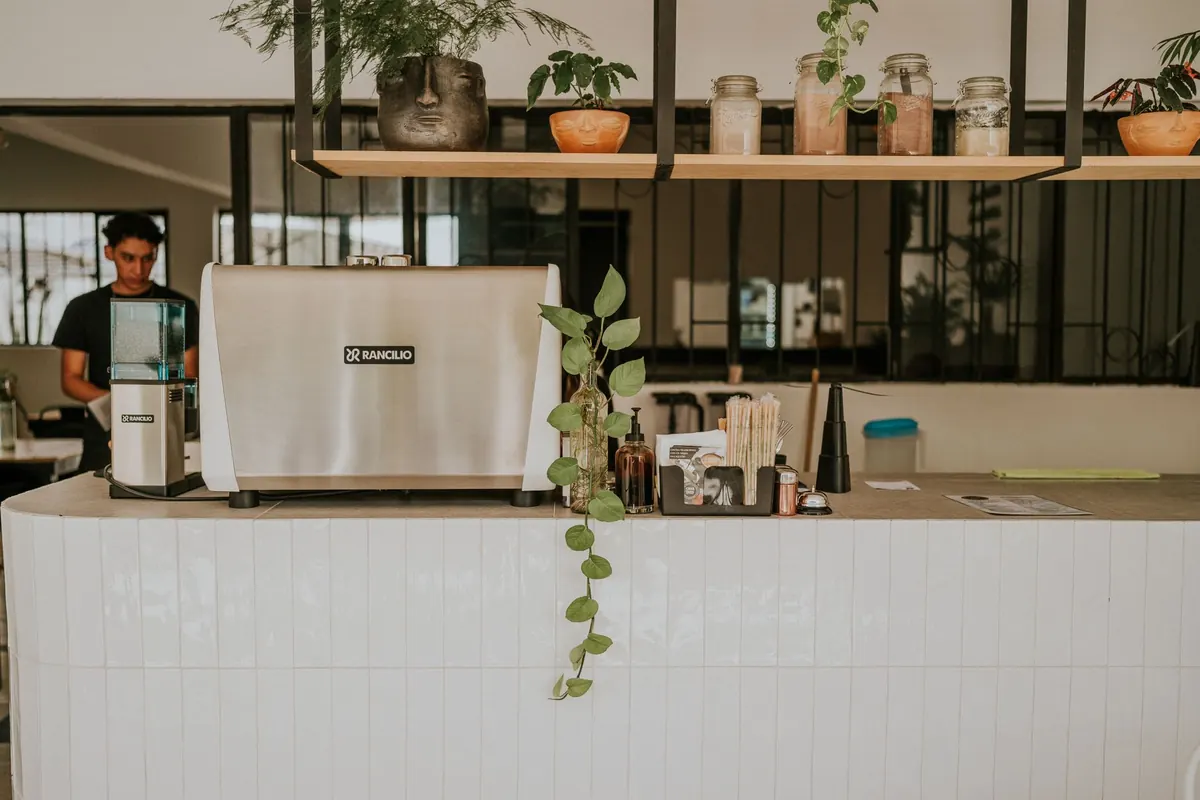
Photo: Amar Preciado / Pexels
You Might Also Like
A hour-by-hour guide to the Italian piazza, from the sweepers at dawn and the commuter crush to the gelato queue, the dinner tables and the last lingering customers.
A practical guide to opening conversations in an Italian piazza — the timing, the first sentence, the listening habits, and the graceful exit that turn a passer-by into a welcome presence.